Cleaning Gadgets That Make Chores Quicker
Cleaning takes time, and most of us would rather spend that time on something else. The right tools won't remove the chores, but they can shorten them — a mop that wrings itself out, a cloth that picks up dust in one pass, a brush that reaches into the gaps a sponge can't. This article looks at the cleaning gadgets that genuinely speed up the work, how to use them, and how to keep them in good shape.
Why the tool matters as much as the effort
Two people can clean the same room and finish at very different speeds. The difference is rarely effort — it is usually the tool. A cloth that spreads dust around means you wipe the same surface twice. A mop that leaves puddles means you go back over the floor with a towel. A brush with soft bristles means you scrub the same grout line three times.
A good cleaning gadget does its job in one pass. It picks up dirt rather than moving it, it reaches the spot you need, and it is easy to rinse and reuse. When you choose cleaning tools, look for those qualities first, and worry about extras second.
The spin mop: floors without the mess
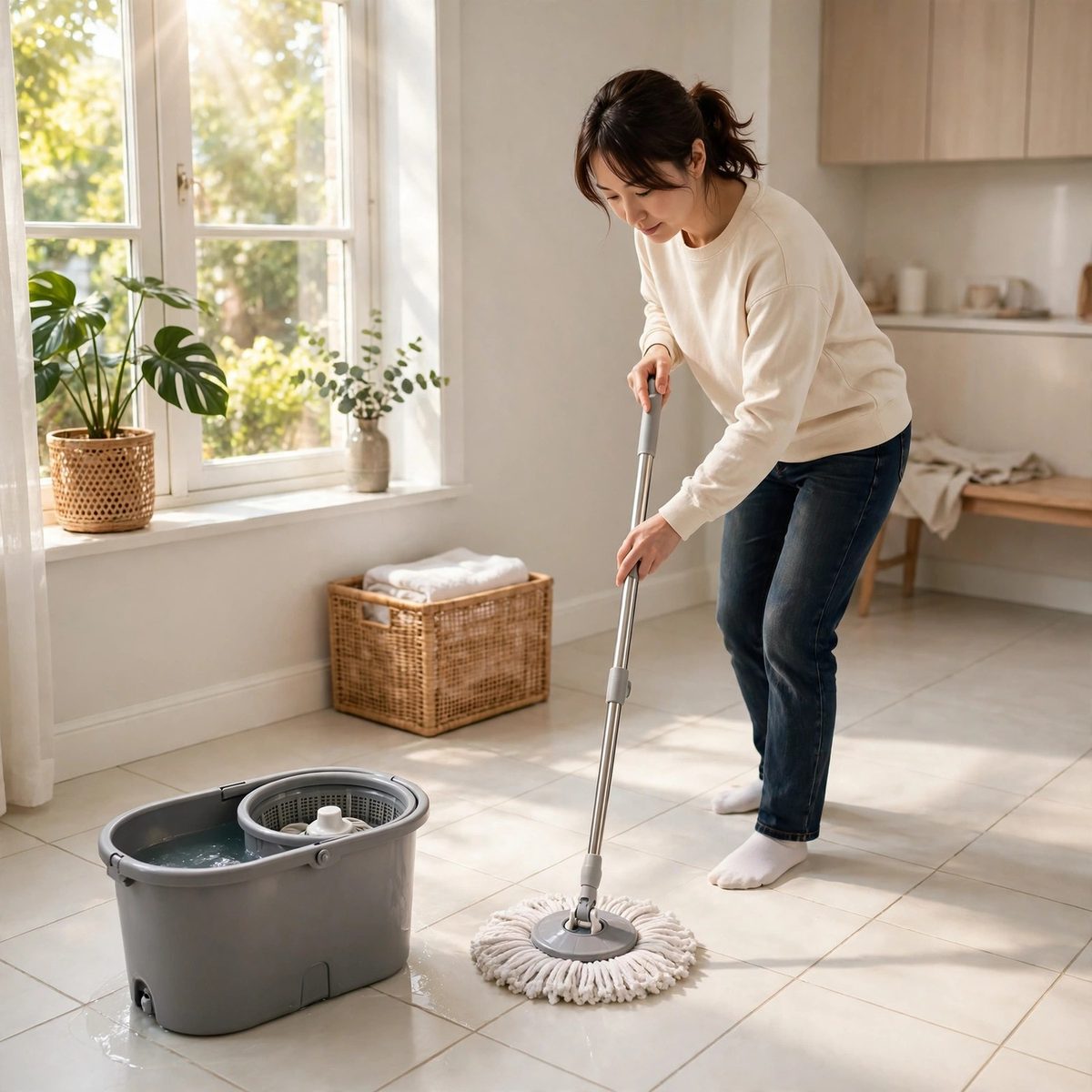
Mopping is one of the chores that benefits most from a better tool. The old way — a mop and a bucket, wrung out by hand — leaves the mop head too wet or too dry, and it means your hands go in the dirty water. A spin mop changes that: the wringer basket spins the mop head, throwing off excess water so the head is damp, not dripping, when it touches the floor.
The Glint & Glow Spin Mop with Bucket combines the bucket, the wringer and the mop in one set, with a grey mop head on a long handle. Start by sweeping or vacuuming the floor, because a mop can't pick up crumbs and hair well. Then mop in sections — work across the room in strips, wringing the head each time you reload it, and don't walk over the section you just cleaned.
For stubborn marks, let a damp mop sit on the spot for a minute before you scrub it, rather than pressing hard straight away. Most marks soften with a little moisture and come off with a gentle pass. After you finish, rinse the mop head thoroughly and let it dry fully before storing it. A mop head that is stored damp can develop a smell, and a worn head leaves streaks — replace it when the fibres start to flatten or fray.
Microfibre cloths: the most versatile tool in the cupboard
If you could only keep one cleaning gadget, a pack of microfibre cloths would be a strong choice. The fine fibres trap dust, grease and dirt instead of pushing them around, which makes them useful on worktops, glass, mirrors, taps, shelves and screens. One cloth can do the job of a duster, a sponge and a polishing cloth, depending on whether you use it dry or damp.
The BrightNest Microfibre Cloths, 12-Pack gives you twelve cloths in mixed blue, grey and yellow, so you can keep separate cloths for different rooms. Colour-coding is a practical habit: use blue for the bathroom, yellow for the kitchen, grey for glass. That way a cloth that has cleaned a bathroom tap never ends up wiping a kitchen worktop.
Fold a cloth into quarters and use one section at a time, refolding as each side picks up dirt. Use it slightly damp for most surfaces and dry for polishing glass or mirrors. Wash cloths regularly with a mild detergent and skip fabric softener, which coats the fibres and reduces how well they trap dust. A well-cared-for microfibre cloth can be washed and reused many times, which makes it a sensible and economical choice.
Window cleaning: getting glass streak-free
Windows streak for a simple reason: the cleaning liquid dries on the glass before you remove it. A squeegee fixes that by pulling the liquid off in one smooth pass, leaving the glass clean and dry. It is the same tool professional window cleaners use, and it works just as well at home.
The Everhome Tools Window Cleaner Squeegee has a rubber blade and a long handle, so you can reach the top of a window without stretching. Start at the top and pull down in overlapping strokes, wiping the blade with a cloth after each pass. Clean windows on a cloudy day if you can — direct sun dries the liquid too fast and leaves marks. Finish by running a dry cloth along the edges and corners, where water collects and can drip back onto the glass.
For the inside of windows, a damp microfibre cloth followed by a dry one often works well, and a squeegee is useful for larger panes. Whichever tool you use, the rule is the same: remove the liquid before it dries, and wipe the blade or cloth often.
Dusters and brushes: the awkward spots
Some parts of a home are easy to forget — the top of a wardrobe, the light fitting, the skirting board behind a door, the grout between tiles. They collect dust and grime quietly, and by the time you notice them, the job feels big. The right tools make these spots quick to deal with.
An extendable duster solves the reach problem. The Glint & Glow Extendable Duster has a telescopic handle and a fluffy microfibre head, so you can dust a ceiling corner and then shorten the handle for a low shelf. Use it dry, work from the top of a room downward, and shake it out or rinse it when the head gets full. Dusting from the top down matters, because dust you knock off a high shelf lands on surfaces you haven't cleaned yet.
For grout lines and tile edges, a stiff brush does what a cloth cannot. The BrightNest Grout Cleaning Brush Set has angled heads that fit into narrow gaps and stiff bristles that scrub away built-up grime. Work in short sections, rinse the brush often, and wipe the area with a damp cloth when you finish so loosened dirt doesn't dry back onto the tile.
A cleaning routine that saves time
Tools work well when they are part of a routine. A home that gets a short daily tidy — wiping worktops, a quick sweep, putting things back — needs less deep cleaning than one that is left for weeks. Set aside a short weekly clean for the bigger jobs: mop the floors, dust the high spots, clean the windows that need it, and wipe the bathroom surfaces.
Keep your tools together in one place, such as a bucket or a cupboard shelf, so you can start without hunting for supplies. If your home has two floors, keep a small kit on each — a cloth, a duster and a spray bottle upstairs, and the same downstairs. It sounds like a small thing, but it removes the friction that makes a quick clean feel like a chore.
Clean one room at a time and finish it before moving on. Starting five rooms and finishing none of them is slower and more tiring than working through a single room properly. And when you finish, rinse your tools, let them dry, and put them back in their place, so the next clean starts the same easy way.
Looking after your cleaning tools
Cleaning tools last longer when they are stored dry. Rinse mop heads, cloths and duster heads after use, and let them dry fully before putting them away. Wash microfibre cloths regularly, keep squeegee blades clean so they don't leave lines, and store brushes bristle-up or hanging so the bristles keep their shape.
Check your tools every few months. A frayed mop head, a torn cloth or a nicked squeegee blade will make cleaning slower and less effective. Replacing a worn tool when you notice the wear is cheaper and easier than struggling with one that no longer does its job.
To see the full range, visit the Cleaning Gadgets collection, where you'll find mops, cloths, squeegees, dusters and brushes for every room.
Browse the Cleaning Gadgets collection
← All articles · All guides · Gadget Size & Compatibility Guide