How to Choose Kitchen Gadgets
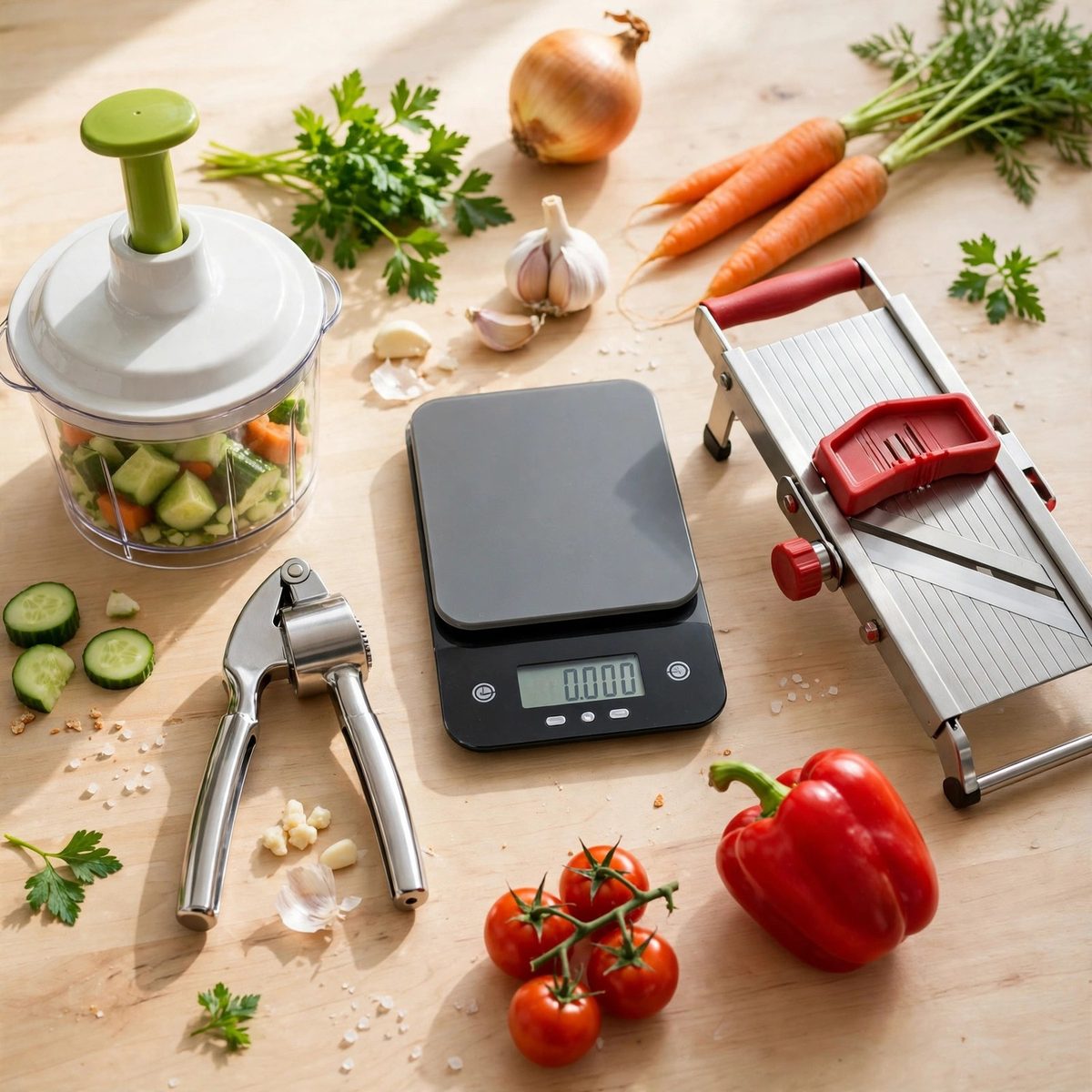
A kitchen gadget earns its place when it saves you time, makes a repetitive job easier, or helps you cook with more confidence. The wrong one ends up at the back of a drawer. This guide walks through how to pick kitchen gadgets that suit the way you actually cook, the space you have, and the meals you make most often.
Start with the jobs you do most
Before you buy anything, think about the tasks that come up again and again in your kitchen. If you chop vegetables most nights, a chopper or a mandoline slicer will see far more use than a gadget built for a job you do twice a year. If you cook with garlic, ginger or fresh herbs regularly, a press or a pair of herb scissors can speed up prep in a real, everyday way.
Make a short list of the three prep jobs that take the most time in your kitchen. That list is a much better shopping guide than any trend, because it points you toward tools that solve problems you actually have. A gadget that matches a daily habit is one you will reach for; a gadget bought on impulse often stays in its box.
Think about your space before you buy
Kitchen space is limited in most homes, and every gadget needs a home. A bulky tool that has to live on the worktop will crowd the space you cook in, while a compact one that fits in a drawer is easy to keep handy. Before you order, measure the drawer, shelf or cupboard where the gadget will live and check it with the measurements on the product page.
Some gadgets help you save space rather than take it up. An Glint & Glow Rotating Spice Rack keeps jars in one spot instead of spread across a shelf, and an under-shelf basket adds storage without taking up worktop space. Choosing gadgets that work with your layout — rather than against it — keeps the kitchen easier to use day to day.
Look at how a gadget is built
A kitchen gadget gets handled, washed and put away many times a week, so the way it is built matters. Look for handles that feel comfortable in your hand, parts that come apart for cleaning, and materials that suit the job. Stainless steel parts tend to hold up well for pressing and slicing, while clear containers let you see how much you have chopped without opening the lid.
Check the care notes on the product page before you buy. Some gadgets can go in the dishwasher; others need to be washed by hand. If you know you will not hand-wash a tool after every use, pick one that is easy to rinse and dry quickly. A gadget that is simple to clean is a gadget you will keep using.
Match the gadget to your cooking style
Different cooks need different tools. If you cook from scratch most nights, a BrightNest Vegetable Chopper with Container and a mandoline slicer can cut prep time on salads, stir-fries and soups. If you bake, a Glint & Glow Digital Kitchen Scale helps you measure flour, butter and sugar with more consistency than cups alone.
If you cook in smaller amounts — for one or two people — look for gadgets sized for that. A compact chopper or a small set of herb scissors may suit you better than a large, multi-part tool. If you cook for a family, capacity matters more: a bigger container means fewer batches, and a wider slicer handles larger vegetables without fuss.
Five questions to ask before you buy
- How often will I use this — daily, weekly, or rarely?
- Where will it live when I'm not using it, and will it fit?
- How long does it take to clean, and can I do it easily?
- Does it replace a job I already do by hand, or add a job I don't need?
- Is there a simpler version of this tool that would do the same job?
If a gadget passes all five questions, it is a sensible buy. If it fails two or more, it is probably better left on the shelf. This simple check stops a drawer filling up with tools that looked useful in the shop but never earned their keep at home.
Keeping your gadgets in good shape
Good habits keep kitchen gadgets working well for longer. Dry metal parts fully after washing so they don't spot or dull. Store blades with their guards on, and keep sharp tools where they won't knock against other utensils. Rinse choppers and presses straight after use — dried food is much harder to shift later, and it can stain plastic containers if left sitting.
Check moving parts now and then. If a chopper lid starts to stick or a scale display becomes hard to read, clean the parts and check for trapped food or moisture. Small problems caught early are usually easy to fix, while the same problem left alone can make a gadget awkward to use.
Building a kitchen kit over time
You don't need to buy everything at once. Start with the two or three gadgets that cover your most frequent jobs, use them for a few weeks, and see what is still missing. Maybe a garlic press would speed up your evening cooking, or maybe a set of herb scissors would make salad prep quicker. Adding one useful tool at a time builds a kit that fits your cooking, instead of a drawer full of gadgets you never reach for.
When you are ready to add to your kitchen, browse the Kitchen Gadgets collection. Each product page lists what the gadget does, how to care for it, and what comes in the box, so you can check options before you decide.
Browse the Kitchen Gadgets collection
← All guides · All articles · Gadget Size & Compatibility Guide