Home Lighting Guide: Lamps and Night Lights
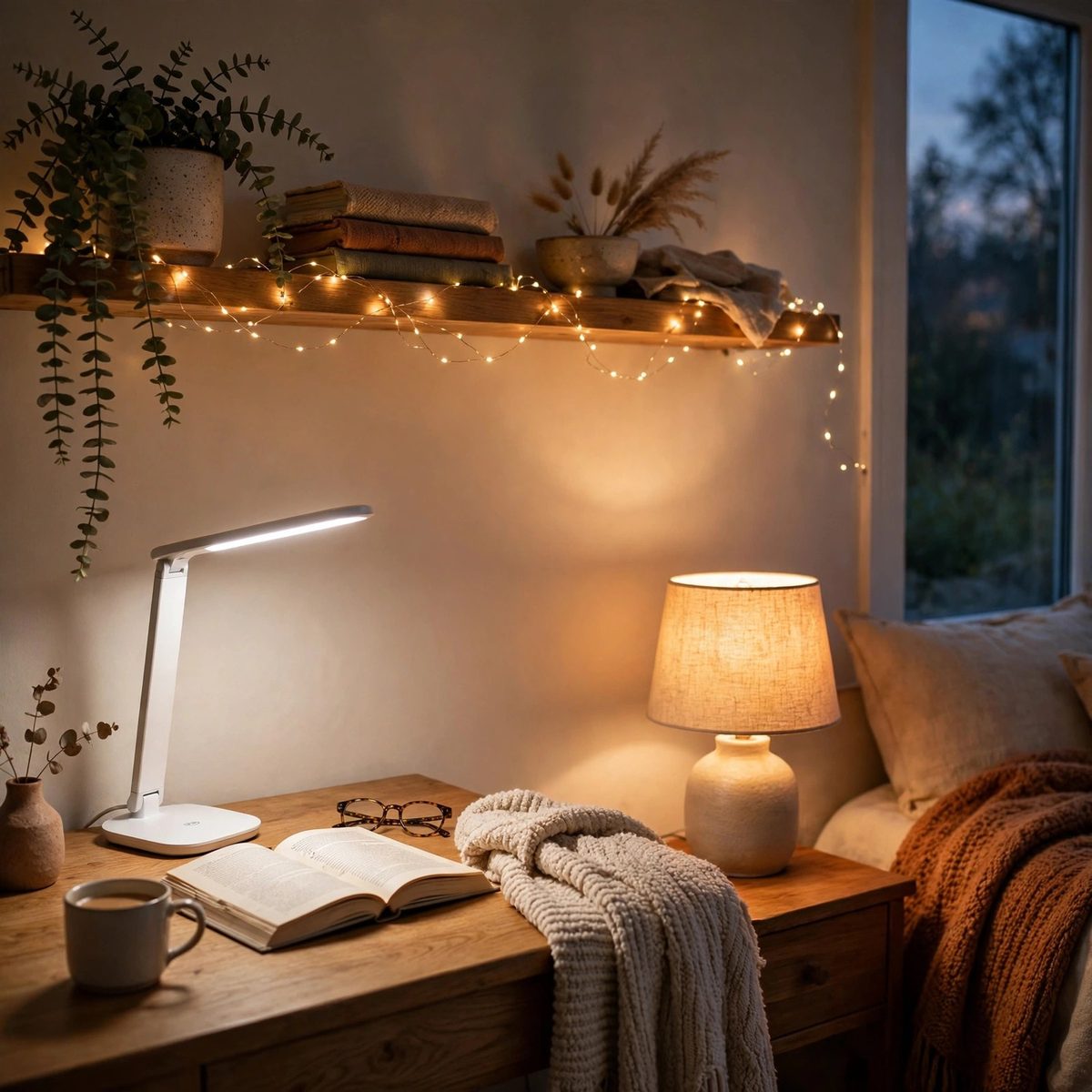
Lighting changes how a room feels and how easy it is to use. A desk lamp makes reading and working more comfortable, a bedside lamp softens a bedroom in the evening, and a night light makes a hallway safe to walk at night. This guide explains how to choose lamps and lights for each room, and how to place them so they do their job well.
Desk lamps: light where you work
A good desk lamp puts light on the task, not in your eyes. Look for an adjustable arm or head so you can angle the light onto a book, a laptop or a piece of work without glare on the screen. A lamp with a steady, even light is easier on the eyes than one with a harsh bright spot in the middle.
The Everhome Tools LED Desk Lamp has an adjustable arm and a round base that sits neatly on a desk without taking up much space. Place it on the opposite side to your writing hand — on the left if you are right-handed — so your hand doesn't cast a shadow over the page. Keep the lamp head slightly above eye level when you sit, and angle it down toward the work surface.
If you work at a computer, a desk lamp can also reduce the contrast between a bright screen and a dark room. A soft pool of light on the desk makes the room feel less dark around the screen, which many people find more comfortable during long sessions.
Bedside lamps: light for winding down
A bedside lamp has a different job from a desk lamp. It should give enough light to read by, without lighting up the whole room. A touch lamp is handy here: you can switch it on or change the brightness with a tap, without fumbling for a switch in the dark.
The BrightNest Touch Bedside Lamp has a ceramic base and a fabric shade, and the touch control on the base lets you turn it on and adjust the light with a tap. Place it within easy reach of the bed, on a surface that is steady and level. A warm-toned light suits a bedroom, because it feels softer and more relaxed than a bright white light in the evening.
Keep the shade clean and dust-free, because dust on a fabric shade can dull the light over time. A quick wipe or a gentle brush now and then is enough to keep it looking and working well.
Night lights: safe, simple light for dark hours
Night lights are for the hours when you need to see your way without switching on a main light — a hallway at night, a bathroom trip, or a child's room. A motion sensor night light only comes on when someone is nearby, so it stays off when nobody needs it and lights the way the moment you step into the room.
The BrightNest Motion Sensor Night Light, 2-Pack gives you two lights, so you can put one in a hallway and one in a bathroom, or one at the top of the stairs and one at the bottom. Place them low on the wall or near the floor, where they light the path without shining into your eyes. Test the sensor range after you install them — walk through the space the way you would at night, and check that the light comes on in time.
Reading lights: light that goes where you go
A clip-on reading light is useful when you want light in a specific spot without a full lamp. It clips onto a book, a headboard or a shelf, and the flexible neck lets you aim the light exactly where you need it. That makes it handy for reading in bed, in a chair, or on a train without disturbing anyone else nearby.
The Everhome Tools Clip-On Reading Light has a flexible neck and a small LED head, so you can point the light at the page and keep the rest of the room dark. Clip it firmly so it doesn't slip, and aim the head at the page rather than at your face, so the light falls on the words instead of into your eyes.
String lights: a warm touch in any room
String lights are a simple way to add a warm glow to a room, a shelf, a window or an outdoor space. They work well draped along a headboard, wound around a mirror frame, or hung across a wall. The key is to keep them tidy — loose wires can look messy and get tangled.
The Glint & Glow Fairy String Lights 33 ft have small warm white bulbs on a copper wire, which is flexible enough to shape around objects. Plan the layout before you hang them: measure the space, decide where the plug or battery end will sit, and use small hooks or clips to hold the wire in place. Check the product page for the power source and the length, so you know whether you need an outlet nearby.
Choosing light for each room
- Living room: a mix of a main light and a smaller lamp gives you options for reading, watching TV or talking.
- Bedroom: a bedside lamp with a warm tone, plus a night light in the hallway outside.
- Kitchen: bright, even light over worktops, with a smaller light for evening use.
- Bathroom: a night light for late-night visits, and a main light that is bright enough for the mirror.
- Children's room: a gentle night light that stays on low, so the room never feels completely dark.
Think about what each room is used for in the evening, and choose lights that match those uses. One light rarely does everything well, but two or three chosen for their jobs usually do.
Looking after your lamps and lights
Keep lamps on steady surfaces and away from the edge of a table, where they can be knocked over. Dust shades and bases regularly, and check cords and plugs now and then for wear. If a light starts to flicker or dim, check the bulb or the connection before assuming the lamp itself has failed.
To see the full range, visit the Lighting & Lamps collection, where you'll find desk lamps, bedside lamps, night lights and string lights for every room.
Browse the Lighting & Lamps collection
← All guides · All articles · Gadget Size & Compatibility Guide