Home Organization Ideas for Small Spaces
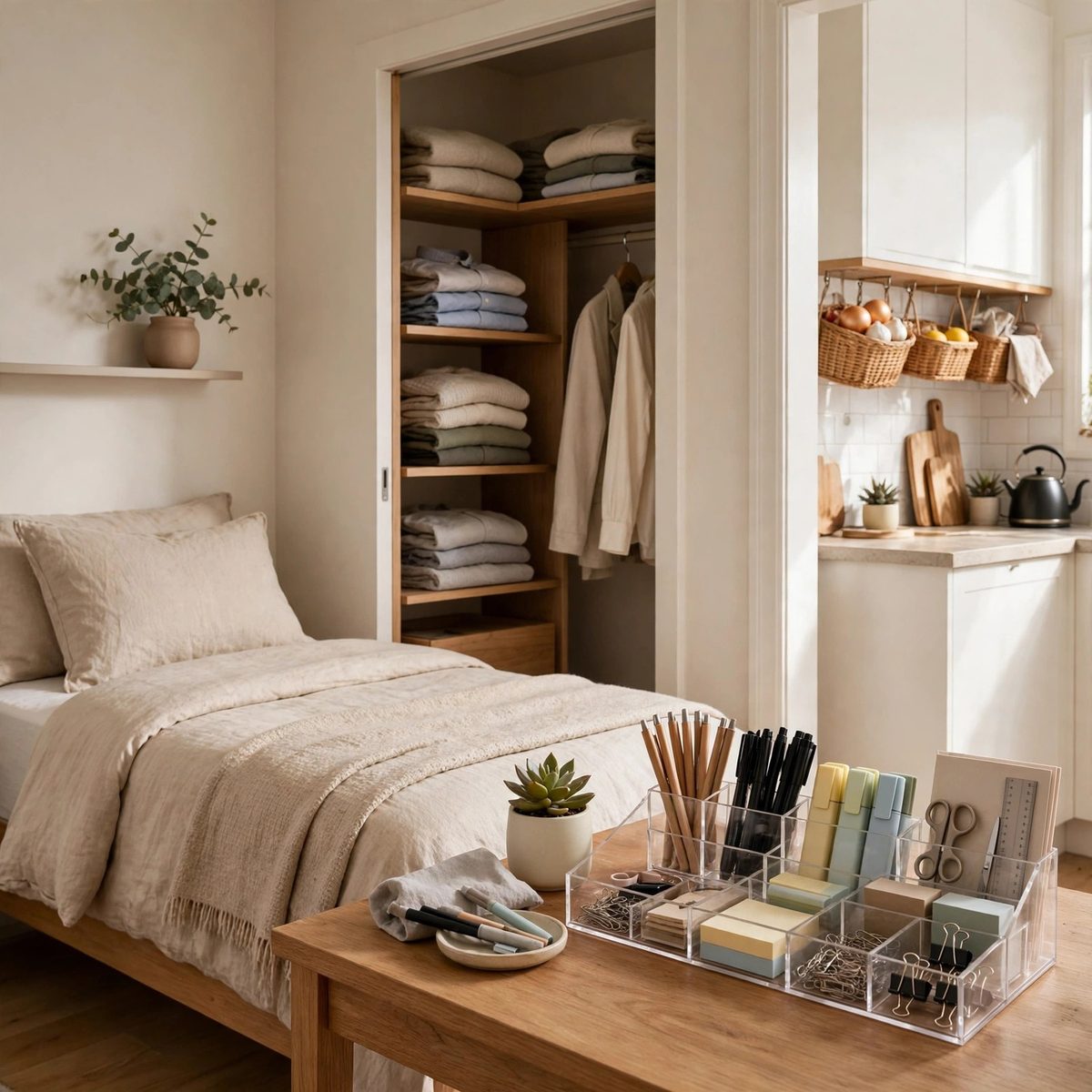
Small spaces are not a problem to solve — they are a layout to work with. A small kitchen, a compact bedroom or a narrow hallway can hold everything you need, as long as every item has a place and the space you have is used well. This article shares practical organization ideas for small homes, room by room, using simple gadgets that make the most of drawers, shelves, closets and the empty space in between.
Start by seeing the space you already have
Before you buy any organizer, look at your home with fresh eyes. Open every drawer, cupboard and closet, and notice what is actually in there. Most small homes have more storage than their owners think — it is just badly used. A shelf with a tall empty gap above the items on it, a drawer full of things that belong elsewhere, a closet rail with empty air underneath it: these are all storage waiting to be used.
Take everything out of one space at a time and sort it into three groups: keep, move elsewhere, and let go. The "move elsewhere" group is often the biggest — things that ended up in a kitchen drawer but belong in a bedroom, or things that live in a closet but are used in the bathroom. Once each item is in the right room, the space it left behind is suddenly useful.
Drawers: small spaces that do big work
Drawers are the workhorses of a small home, because they hold a lot in a small footprint. But a drawer without dividers becomes a jumble, and a jumble wastes the space it was meant to save. A drawer organizer divides the space into compartments, so each kind of item has its own spot and the drawer stays tidy with almost no effort.
The Glint & Glow Drawer Organizer Set has four compartments in different sizes, made from grey fabric. Measure your drawer before you buy — length, width and depth — and check it with the product measurements. Put the items you use most in the front compartments, and the things you use rarely at the back. If a drawer is deep, use the taller compartments for upright items like scissors and the shallow ones for flat things like tape and batteries.
One habit makes drawer organizers work long-term: when something new comes into the house, decide which compartment it belongs in straight away. If there is no compartment for it, the item either replaces something else or it needs a different home. That rule stops drawers filling up again within a month.
Closets: using the height you already have
Most closets have wasted vertical space. A rail with hanging clothes leaves a gap underneath, and a shelf near the top often has empty air above the folded clothes on it. A hanging organizer fills that gap with shelves, giving you places for folded clothes, shoes, bags and linens without any fittings or screws.
The BrightNest Hanging Closet Organizer hangs from the rail and has six shelves and two side pockets. Use the top shelves for out-of-season clothes and the middle shelves for everyday items, so the things you reach for most are at eye level. The side pockets are handy for belts, scarves and gloves — small items that would otherwise get lost on a shelf.
If your closet is crowded, try rotating clothes by season. Keep the current season's clothes in the closet and store the rest in a box on a high shelf or under the bed. That one change can free up a surprising amount of space, and it makes the closet easier to use every morning.
The kitchen: storage in the gaps
Kitchens run out of space faster than any other room, because they hold more kinds of items — food, cookware, utensils, cleaning supplies — in a room that is often the smallest in the house. The trick is to use the gaps: the space under a shelf, the inside of a cupboard door, the corner of a worktop.
Under-shelf baskets use the empty space below a shelf. The BrightNest Under-Shelf Basket Set, 2 Pieces hooks under a shelf and holds mugs, packets or small jars, turning a dead gap into storage. Measure the gap between your shelves first, because the basket needs enough height to hang and hold items without blocking the shelf below.
A rotating spice rack is another gap-filler. The Glint & Glow Rotating Spice Rack has two tiers and small jars, so it fits on a worktop or inside a cupboard, and spinning it brings the jar you need to the front instead of digging through a row of jars. Group your spices by how often you use them — the everyday ones on the top tier, the occasional ones below.
Inside cupboards, the same principle applies: use the vertical space. A small shelf inside a cupboard doubles the usable area, and hooks on the inside of a door hold measuring cups or cleaning cloths. The aim is not to fill every gap, but to make the gaps you have work for the things you use.
Cables and chargers: the hidden clutter
Cables are one of the biggest sources of clutter in a small home, because they multiply — a charger for each phone, a cable for each device, a power strip to hold them all — and they collect in the places you notice most, behind a desk or beside a bed.
The Everhome Tools Cable Organizer Box hides the mess: the power strip sits inside the box, cables pass through slots in the side, and the lid keeps dust out. Label each cable with a strip of tape — "phone", "laptop", "lamp" — so you can find the one you need without pulling them all out. Keep the box where you can open the lid easily, because you will add and remove cables over time.
For chargers you use daily, a small tray or a drawer compartment works well. Keep one charger per device in the spot where you use it, and store spares in a labelled box elsewhere. Most households have more chargers than they need, and clearing out the spares is one of the quickest wins in a small home.
The bathroom: small room, smart storage
Bathrooms are often the smallest room in a home and the one with the most small items — toothbrushes, soap, razors, medicines, towels. Without storage, those items end up on every flat surface. A shower caddy keeps bottles off the edge of the bath, a soap dispenser set keeps the sink clear, and a toothbrush holder keeps brushes upright and separate.
An over-door towel rack adds hanging space without any fittings. The BrightNest Over-Door Towel Rack hooks over the bathroom door and gives you two bars for towels, which is useful when wall space is taken up by a mirror or a cabinet. In a small bathroom, the back of the door is often the largest unused surface in the room.
Keeping a small home organized
Organization in a small home is not a one-time project — it is a habit. A five-minute tidy each evening, putting things back where they belong, keeps the system working. A longer check every month or two — pulling out what has crept in, making sure each item is still in the right place — stops the slow drift back to clutter.
The rule that matters most is simple: everything has a place, and the place is easy to reach. If putting something away takes effort, it will end up on a surface instead. If the place is easy and obvious, tidying becomes automatic. That is the real goal of organization in a small space — not a home that looks tidy in a photo, but a home that stays tidy because it is easy to live in.
To see the full range, visit the Home Organization Gadgets collection, where you'll find drawer organizers, closet organizers, cable boxes, spice racks and more.
Browse the Home Organization Gadgets collection
← All articles · All guides · Gadget Size & Compatibility Guide